The Right Game
Your life begins the day you realize that the only thing standing between where you are now, and where you want to be, is a commitment to doing what's required to change. It all starts with a simple step.


Learn how to play to win the games that matter.
Duolingo makes $500 million a year teaching people languages they'll never use.
The real game isn't "become fluent in Spanish." That takes years. That's abstract. That's tomorrow's problem. The real game, the product, is "don't break the streak."
They turned language learning into a fire emoji that goes out if you skip a day. Internal tests showed that richer streak visuals alone boosted 7-day retention by 1.7%. Lessons stay tiny—5 minutes. But the streak counter, the league rankings, the animations when you complete a session? That's the dopamine hit.
They didn't gamify the outcome. They gamified the process. Fluency is almost a side effect.
Most founders get this backwards. They try to "love the work," "find their passion" or grind harder.
You don't have to love hard work. You just have to make it winnable.
Make sure you're playing the right game
Social media companies already figured this out. They built games for advertisers, not for you.
Twitter gamified engagement with likes, retweets, and follower counts. You can rack up 10K followers and still be broke. Instagram gamified scrolling. TikTok gamified watch time.
None of these games optimize for your outcomes. They optimize for the attention other platforms can sell.
The trap is subtle. You start gamifying email responses, Slack replies, meeting attendance. You're optimizing, but you're optimizing the wrong metric. You're just busy. Not winning.
Before you design any game, ask one question:
"Does winning this game get me closer to the outcome I want?"
If the answer is no, don't play.
If the answer is yes, steal from the people who've already cracked the code.
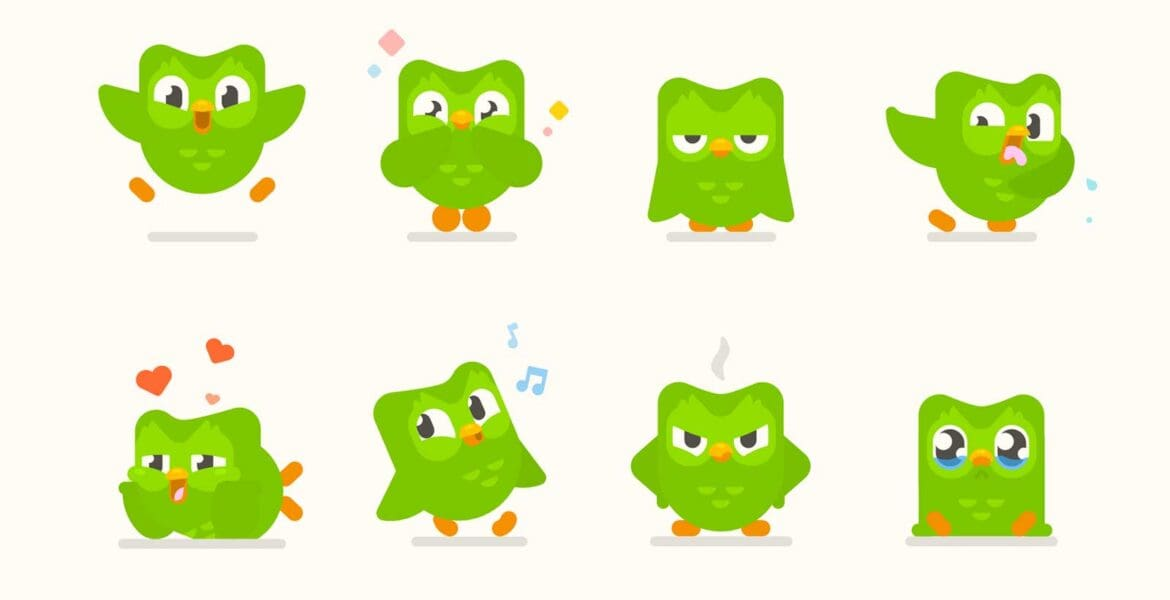
Duolingo: Gamified consistency over outcomes
Everybody wants to learn a language fast. Almost nobody can.
Duolingo fixed this by making the real game "show up daily," not "become fluent overnight."
Their streak counter, with fancy animations and a "streak freeze" buffer if you miss a day, turns consistency into dopamine. Richer streak visuals alone boosted 7-day retention by 1.7%.
Lessons stay tiny. Five minutes. But the fire emoji and league ranking make you want to log in tomorrow.
The principle: Reward showing up, not mastery.
Most people quit learning because progress towards fluency feels invisible. Duolingo made progress visible every single day. You don't know if you're "good at Spanish" yet. But you know you logged in 47 days in a row.
That's a game you can win today.
Strava: Turned solo suffering into public competition
Solo runs suck on rainy Tuesdays. Who's watching?
Strava solved that by turning roads into public leaderboards.
Random hills become "segments" with KOM/QOM rankings (King/Queen of the Mountain) you can attack anytime. Your buddy crushed your PR? Now you're going back to reply.
Studies show more kudos from friends = more miles run. It's not raw speed. It's seeing your name move up the board. Training stops being private pain and starts feeling like a shared scoreboard.
The principle: Social proof makes effort feel worthy.
When you post a run, you're not just logging data. You're posting something people will see. That shifts the psychology. The work becomes visible. The effort becomes social.
Strava didn't make running easier. They made it feel like it mattered.
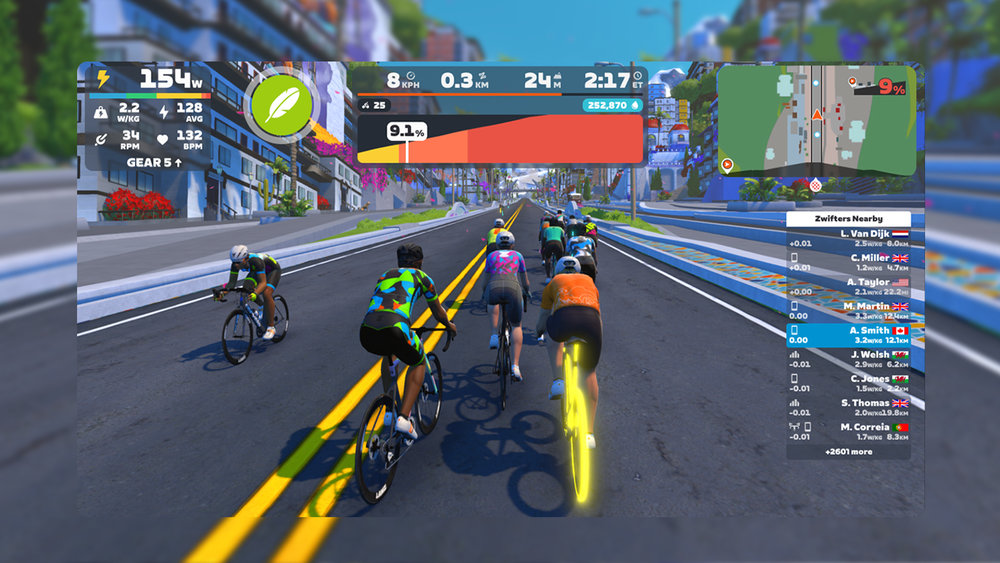
Peloton/Zwift: Made basements into arenas
Basement bikes gather dust because suffering alone feels pointless.
Peloton and Zwift turned them into arena games.
Real-time leaderboards rank you against live riders. Games like Lanebreak turn intervals into rhythm-score chases with avatars and high-fives. Onboarding gamification locks in weekly habits early. Then milestones: rides completed, distance traveled, streak alive. All keep you climbing virtual worlds.
You're still FTP-capped. Your legs still burn. But now every pedal stroke adds a few more "drops" to your account that help to unlock gear and levels.
Boredom doesn't stand a chance.
The principle: Competition + unlockables = engagement.
You're not just riding a bike. You're racing strangers in New Zealand. You're unlocking the next world. You're chasing the leaderboard.
Sales teams: Gamified inputs, not outcomes
Sales is 90% rejection. To help, smart sales leads gamify inputs instead.
Points for calls. Points for demos. Points for follow-ups. Hit the leaderboard instantly. Badges for "10 meetings booked" so bad days still yield wins.
Short sprints and team contests add loss aversion. Who doesn't hate falling in the rankings or dragging your crew down.
The principle: Points for effort, not results.
You can't control whether someone buys. But you can control whether you made 50 calls. So you gamify the thing you control.
Set up right, even bad days still yield wins. That keeps people in the game.
The framework: Decode, design, deploy
Before you gamify anything, run through this quick process:
1 Decode the momentum killer: What's the one repeating hard thing blocking your desired outcome?
2 Design the game: Which mechanic fits? Streak? Leaderboard? Milestone? Social proof?
3 Deploy the loop: Make feedback instant and visible.
Don't gamify busywork. Gamify leverage.
Here are three common killers and how to gamify them.
Killer #1: Failure to Prioritize
42% of knowledge management experts say employees are too overworked to focus on high-value work like prioritizing critical tasks. It's the #1 threat to getting real work done. (APQC 2025)
Meanwhile, knowledge workers average just 2.4 hours of daily focus time. (Worklytics 2025)
The problem isn't that you don't know how to prioritize. It's that you're drowning. Meetings, Slack pings, email. Everything feels urgent. Here's how to transition to winning.
Step 1: Turn off the bad games for 1 hour each day (9-10).
Step 2: Make a list of the 5 most important things this week.
Step 3: Work daily for that hour to check items off the list.
Step 4: Earn reward at the end of the week.*
* you should get some kind of reward at the end of the week, even if you just did it one day. progress requires rewards!
Killer #2: Learning new skills
35% of workers name upskilling employees as their #1 anticipated challenge. (Wiley 2025)
31% of knowledge workers say they lack the skills to advance. (ADP 2025)
The problem: Cross-training—learning new tools, markets, skills—is crucial for founders and operators. But it's slow. It's solitary. And there's no "done."
You can read and scroll forever. You can test tools for months. It feels like progress, but it looks nothing like it. So let's break it down.
Step 1: Ignore what everyone else is telling you.
Step 2: Define what you want to learn in a short list.
Step 3: Watch 5 videos on the topic you want to learn.
Step 4: Use the videos to craft a really detailed question on what you want to learn.
Step 5: Put that into your favorite GPT to get answers.
Step 6: Ask it for a book to read or an author to follow.
Step 7: Celebrate, you are learning like a boss.
Final Thoughts
This is a great time for me to share my favorite James Clear quote with you.
The person who has the most fun wins.
It could be something as simple as less time on your phone, more time walking every day, or practicing gratitude five minutes a day.
All of which can compound over time to make you an infinitely better person, if you want to play the game.
I hope you do.