If You're Working Hard, You're Hardly Working
The people who break out don’t do everything. They happened to do one thing that changed everything.

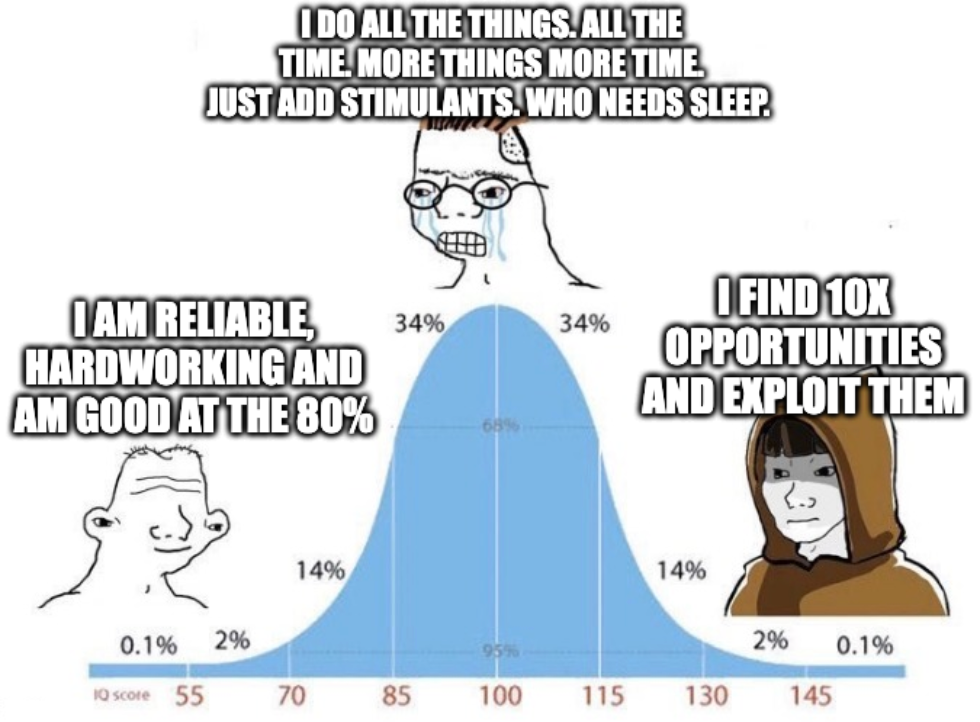
We were raised to believe that effort equals value.
That if you answer more emails, join more calls, and log more hours...good things will eventually happen.
It's a lie designed to get you to do the work (or more of it) to justify your salary. Trading time for dollars is not the game you want to be playing, even if it's the game that everyone else is playing.
The people who break out don’t do everything. They happened to do one thing that changed everything.
If your goal is to get to inbox zero or "no red dots," you are headed in the wrong direction.
Your job isn’t to do all the work all the time. Your job is to spot and capitalize on single points of leverage for better outcomes.
Don't Take My Word For It
Go find the most successful person you know and ask them to pinpoint when it happened.
The financial breakthrough, the promotion, the opportunity that changed their trajectory.
You’ll hear about one client, one champion, one project, one key moment. This is because success is non-linear.
It’s human nature to assume things operate in straight lines. But that couldn’t be further from the truth.
Success Isn’t Linear
We assume progress is incremental: 1+1+1+1+1+ and on to infinity.
Turns out that success is stochastic. It's volatile. It arrives in waves, spikes, and bursts.
Yes, we try to control for it. We build networks, go to the “right” schools, associate with smart people, and read the right things. But it doesn’t matter how many seeds you plant if the rain only falls once.
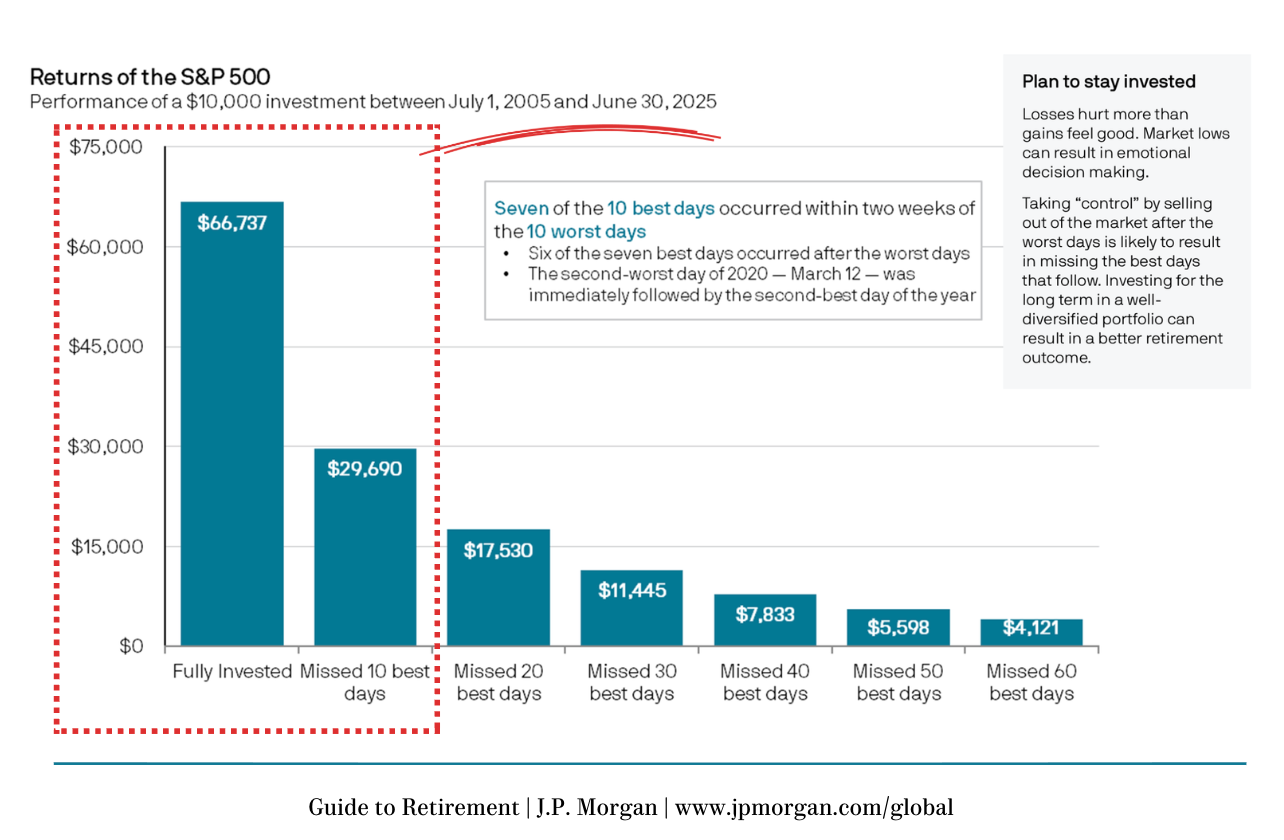
Look at a 10- or 20-year stock chart. The bulk of the upside comes from a handful of days. Miss them, and you miss the gains.
Just missing 10 days in a 20-year span could cost you 50% of your returns. 50%!
The same is true with your work. The results are nonlinear.
You’re not climbing a staircase. You are taking steps to increase the odds that you are going to find the best possible step to take next.
Nobody Cares How Hard You’re Working
This is the trap.
You go to work, you put in 10 hours. You answer Slack messages. You write a doc. You clean out your inbox. You go home exhausted and underappreciated. You did everything — and somehow, it still wasn’t enough.
Tomorrow you get to do it all over again.
Here’s the truth: nobody cares. Maybe your mom does, but everyone else is heads down working too.
If you’re not figuring out how to do the job better — not harder, better — you’re not moving the needle.
Success at work is about outcomes, not inputs.
Stop Starting at Level One
Everyone’s busy. Everyone has a full plate. Today's forecast: 100% chance of overwhelm.
High-agency people zoom out. They scan the whole landscape. Then they pick the one or two things worth doing — and ignore the rest.
If you’re working for someone else, most deliverables are there to make sure you’re doing your job. That is the bare minimum.
Don’t confuse those deliverables for the work that actually moves the business.
Sure, do your job. But also do it better by focusing on the pieces with the highest upside.
If You’re Doing It Right, You’ll Look Lazy
Remember when I said hard work is just hard?
Here's the opposite version (also true). The best work doesn’t look like work at all.
Thinking, sketching, and staring out the window are value-generating activities. Walking, talking, and reading too.
If you’re sprinting from one thing to the next, furiously multitasking and answering pings like it’s Whac-A-Mole, you’re not being productive. You’re just busy.
tldr; Sharpen the axe. Don’t just swing it.
Be a Barbell, Not a Blender
Nassim Taleb’s barbell strategy is simple: avoid the middle.
Put 80–90% of your resources into extremely safe bets (low downside, low return). Use the remaining 10–20% for extremely high-risk/high-reward opportunities.
Why? Because most major gains come from rare, nonlinear events.
In your work, that distribution looks like this:
- 80% of your time: solid, dependable, excellent execution. Earn trust.
- 20% of your time: asymmetric bets. The stuff that could 10x.
When leadership says they want “10x talent,” they don’t mean they want you operating at 10x velocity every day.
They mean they want you positioned to seize the one moment when 10x is possible.
You don’t win by doing everything. You win by doing the right thing — at the right time — better than anyone else.