Training for a Moment You Can't Predict
Michael Phelps won gold in Beijing with goggles full of water. His coach had made him practice swimming blind for years, counting strokes to the wall, so that when the moment arrived, the response was already built. You can't predict when the attack will happen. But you can train how you respond.
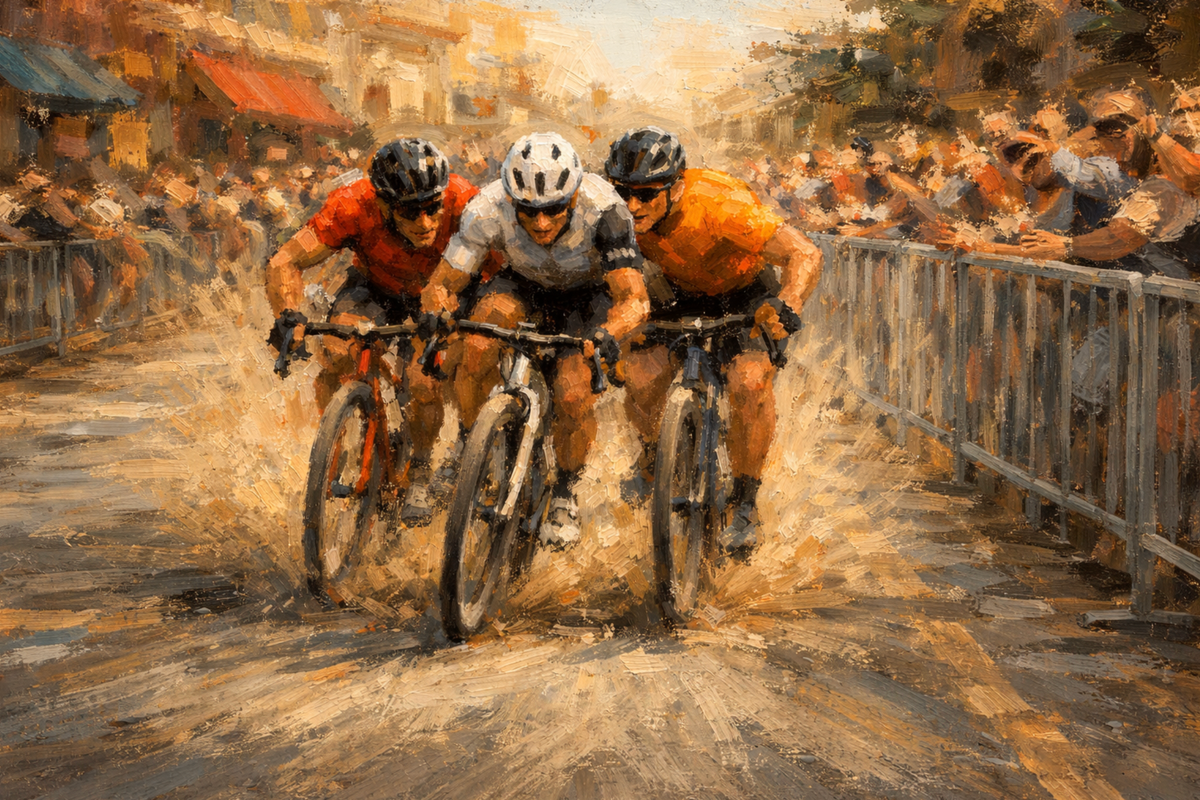
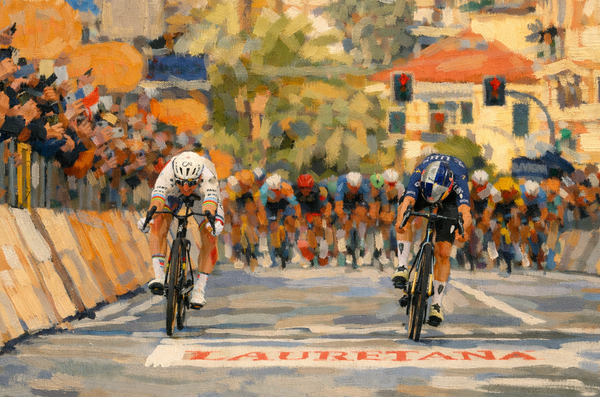
Steamboat Gravel, Black edition. Five miles to go.
I'd been on a tear for the last two to three hours. Passing riders, making progress, feeling strong. I was in my happy place (watching others slow down).
Then I passed two riders, and they stuck with me. Caught up, settled in. The way they were staggered, I don't think it was intentional, but I couldn't attack. They'd boxed me in without me realizing it. And as a rookie, I didn't see it for what it was until it was too late.
We came into downtown. Last mile. They sprinted off.
I finished behind them.
Here's what I learned afterward, turning it over in my head: by boxing me in, they'd given themselves permission to rest. They recovered while I was stuck. When the moment came, they were ready. I wasn't.
I had the fitness. I didn't have the readiness.
The Unpredictability of Racing
In a time trial or solo effort, you're racing yourself. You know from past experience, or you learn from the folklore about hitting the wall in a marathon, roughly where your body breaks. You can build a plan around it. The variables are mostly internal.
Group racing is different. You're racing against other people, and the decisive moments are unpredictable. They happen when someone else decides. When a gap forms. When two riders happen to box you in without trying. You can't script for it.
At Unbound Gravel, the first four hours out of a twelve-hour day do most of the separating. The lead group forms, the pace is brutal, and the field fractures. Being able to work hard and stay in that group (not blow up, not lose the wheel) is the primary advantage of the whole day. It's not about going out easy and getting stronger later. It's about being in the right place when the race really starts.
You can't predict when it will start. You just have to be there when it does.
The Steamboat story made sense to me only after it was over. I could've pushed out earlier. Challenged them from farther out. Made the move from a position of control rather than waiting until the sprint. But I didn't recognize the situation while I was in it.
That's the real problem. Not fitness. Not strength. Awareness. Seeing what's happening while it's happening.
Fitness is a resource. Readiness is knowing how to use it.
Readiness vs. Prediction
Michael Phelps at the 2008 Beijing Olympics.
In the 200-meter butterfly final, the most important race of his life to that point, his goggles leaked. Slowly filled with water. By the last half of the race, he was effectively blind.
He won gold. Set a world record.
That's not the story of a miracle, it's a tale of perparation.
His coach, Bob Bowman, had deliberately scripted what-if scenarios in training for years. What if your goggles break? What if your suit tears? What if you cramp mid-lap? Phelps had rehearsed swimming blind by counting strokes per length so many times that when his vision disappeared in Beijing, he already had the answer. He knew exactly how many strokes it took to reach the wall. He trusted the count, hit the turn, and finished.
The moment was unpredictable. His response to it wasn't.
That's the distinction I'm trying to build into how I train and race. You can't predict when the attack will happen or who will initiate it. You can't predict goggles leaking or getting boxed in with five miles to go. But you can practice being in that state. You can build responses that run on their own when your brain is maxed out.
What does readiness actually look like in structure?
Phase 1 is fitness. You can do the distance. You have the engine. Without this, nothing else matters.
Phase 2 is the plan. You know what you're trying to do. Your effort strategy maps to your fitness. You've thought through nutrition, pacing, where the race will likely get hard.
Phase 3 is execution. Race day is just solving a series of problems between the start and the finish line. The more latitude you've built through fitness and planning, the more flexibility you have when the problems are different than you expected.
Without the first two phases, you're adjusting blindly. You don't even know what you're adjusting from.
One thing I've learned about over-indexing on the competition: it doesn't help. It doesn't matter who else showed up to the race. It matters who's around you when the race actually starts to happen. I've seen athletes do exhaustive research on their competition, build whole race strategies around specific riders, and then that rider has a mechanical at mile ten and the whole plan falls apart. Meanwhile, there's someone three rows back having the day of their life, and that's the actual race you're in.
Know what you need to do at the time you need to do it. Put yourself in the right place. Everything else is noise.
The Cost of Waiting
Banu Guler founded Co-Star, the astrology app, before the market considered personalized astrology apps a serious category. The funding pitch arrived to Female Founders Fund as a cold email, no warm introduction, no established track record in the category. But the fundamentals were already in place: a compelling founder, a clear and underserved audience, a product that was ready to ship.
When cultural interest in personalized, data-driven astrology surged — and it did surge, in ways nobody cleanly predicted — Co-Star was already live, already scalable, already capitalized. They didn't catch the wave by being prescient about exactly when it would arrive. They caught it by being ready when it did.
The opportunity wasn't forecastable. The readiness was.
Shivani Siroya built Tala to provide financial services and credit access in emerging markets where large populations are unbanked. Mobile data, alternative credit scoring, and regulatory openness to fintech were all evolving when she started. No one could predict when those pieces would align in specific countries. What she could control was the foundational work: deep on-the-ground research, an operational model built for local realities, product architecture that could scale once smartphone adoption crossed a threshold.
When the threshold arrived, faster than expected in some markets and differently shaped than anticipated, Tala was executing a model, not inventing one. Incumbents were still treating the segment as an experiment. Tala was already there.
Both stories have the same underlying structure: the moment was random, the response was built long before it arrived.
Now compare that to what happens when you wait.
I've waited to apologize before. Thought about the right time. Thought about how to frame it. Thought about when they'd be most receptive. And the more time passed between what I did wrong and when I said something, the worse everything got. The awkwardness compounded. The relationship calcified around the gap.
I've learned: you say it right away. You own it immediately. Not because it's comfortable, but because the alternative is worse every single day you delay.
Debt works the same way. Addressed when it's small, it's a problem. Left alone, it becomes the problem. By the time it's unbearable, the options for fixing it have narrowed dramatically.
The race isn't over until you decide to stop racing. Even after a missed move, even after getting boxed in, even after losing the break, you can still make up time. You can still close gaps. But only if you're working. The moment you stop working, the gap becomes permanent.
Why do people wait? Because going early is uncomfortable. The unknown is real. You won't know what you're capable of, or what impact your actions will have, until you take them. That uncertainty is the whole thing. Taking action removes the guessing. Good or bad, you learn. You get better. You can't optimize something you haven't tried.
The Readiness Framework
You can't control when the moment comes. You can control everything that determines whether you're ready for it.
Three pillars.
Fitness. Build the foundation. Do the work. Be capable. This is the non-negotiable. Everything else sits on top of it. Without the base, there's nothing to draw from when the moment hits.
Plan. Know what you're trying to accomplish and map it to your actual capacity. Not someone else's race. Yours. The plan keeps you from making reactive decisions that compound into problems.
Presence. Be in the moment. Recognize what's happening while it's happening, not in retrospect, not on the drive home. This is the hardest one. It's the difference between seeing the box forming before it closes and realizing what happened after they've already sprinted off.
You never know for certain if you're ready. You only know how far you've come. You look at the work, check the numbers, feel the confidence that comes from a foundation you can trust, and then you go.
A huge part of being in the right place is not being in all the wrong ones. Success in endurance racing, and in most long games, comes significantly from eliminating the problems that hold you back. Being well-positioned. Removing friction. Avoiding the traps that seem small and become decisive.
If your business is in order, your life is in order, and you have capital — time, money, relationship capital — you can take the leap when the opening appears. You can't manufacture the opening. But you can make sure you're not disqualified from it when it arrives.
The Race Is Still On
You don't choose the moment. The attack happens when it happens.
You either respond or you don't.
Fitness is a resource. Readiness lets you use it.
Phelps couldn't predict that his goggles would fill with water in the Olympic final. He could only build a response that didn't require his eyes. Tala couldn't predict exactly when mobile infrastructure would hit the threshold in specific markets. They could only build a model that was ready when it did.
I couldn't predict two riders would box me in at Steamboat with five miles to go. But I know now what to do when I see it starting to happen. I got that lesson by losing it. I won't lose it the same way twice.
That's how you train for a moment you can't predict. You become a student of your own performances. You understand when the decisive moments tend to happen for you. You build responses in practice so they run in the race. You refuse to wait for perfect conditions to start the preparation.
The best time to start was yesterday. The second best time is now.
The race isn't over until you decide to stop racing.
--
PS What moment are you training for that you can't predict? What are you waiting to do that you should've done yesterday?